Chemistry of Sustainable Foods

Our vision is to advance fundamental understanding of the chemistry underlying sustainable foods and to contribute to the development of foods that are safe and health-promoting.
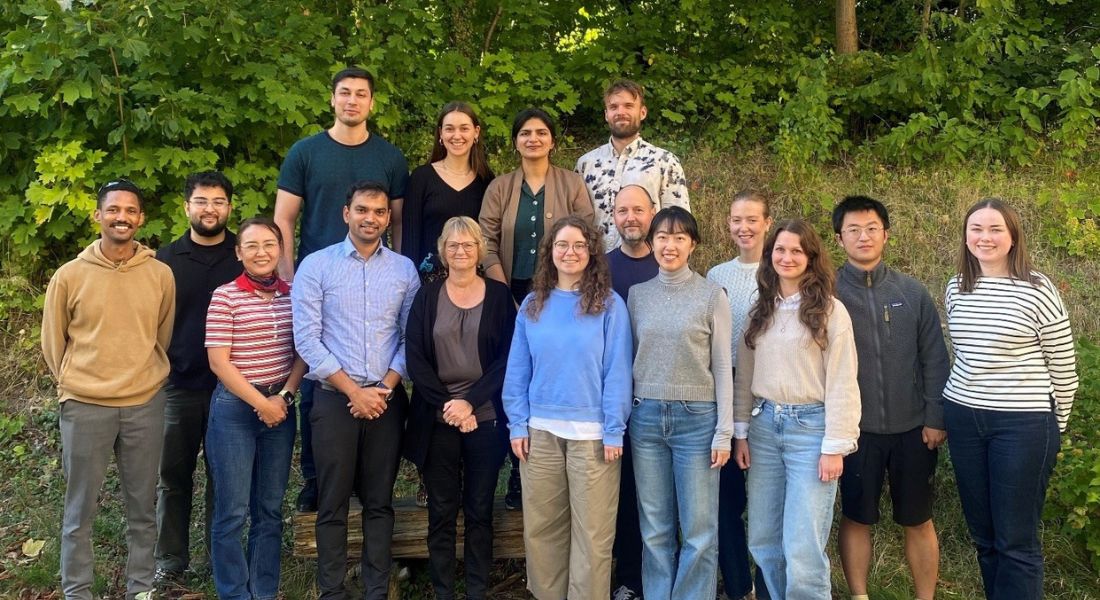
Picture of the research group standing outside

Our mission is to uncover how chemical reactions during extraction, purification, and storage affect the structure, functionality, and biological impact of food components. By integrating analytical chemistry, food chemistry, and interdisciplinary approaches, including biological sciences and AI, we aim to generate knowledge that supports the design of next-generation sustainable foods.


The group investigates the chemistry of sustainable foods with a specific focus on proteins, lipids, carbohydrates, phenolic compounds, vitamins, and their interactions with reactive species during processing. We study how these reactions affect nutritional quality, safety, and health outcomes.

A key research direction involves understanding process induced chemical modifications arising from novel and emerging food processing technologies, including cold plasma, ultrasound, ultrafiltration, electrodialysis, dynamic adsorption, UV processing, chemical treatments, and pulsed electric fields, and how these technologies affect the structure, reactivity, and stability of major and minor food components.

We are also engaged in identifying and quantifying food related chemical toxicants and anti-nutrients, assessing their potential impact on human health.

Our work spans plant-, algal-, fermentation-based and upcycled foods, using dairy systems as a benchmark, with planned expansion to emerging food sources.

The group operates in a highly international and collaborative environment, bringing together expertise across chemistry, food science, and biology to address complex challenges relevant to future food systems.


  • Protein purification and characterization

  • Chromatography and mass spectrometry method development and validation

  • Targeted and untargeted small molecule analysis and peptide analysis

  • Sample preparation techniques (protein hydrolysis and purification of small molecules)

  • Protein oxidation, crosslinking, and structural transitions

  • Chemical and enzymatic modification of proteins

  • Process induced chemical modifications in plant based and alternative proteins

  • Protein–lipid interactions

  • Protein–polyphenol interactions

  • Reaction mechanisms involving reactive oxygen, nitrogen, and carbonyl species (ROS, RNS, and RCS)

  • Microalgae cultivation and biomass valorization

  • Integration of experimental data with biological studies and AI based modelling in collaboration with external partners


  • Advanced chromatography platforms (UHPLC UV DAD, UHPLC Orbitrap MS/MS, UHPLC QqQ)
  • Mass spectrometry software for molecular characterisation
  • Spectroscopic, biochemical, and structural analysis tools
  • Cold plasma and microwave treatment systems
  • Microalgae cultivation and biomass characterization
  • Facilities for controlled food processing experiments and stability studies
  • Facilities for pilot scale protein purification


  1. Protein and Lipid Oxidation Interplay in Plant-Based Foods and their Impact on Brain Function, Funding agency: Independent Research Fund Denmark. Sapere Aude Research leader grant, PI: Mahesha M. Poojary; partners from DTU-FOOD, UC Davis, and TU Dresden

  2. Uncovering the effects of cold plasma on oxidation of grain proteins. Funding agency: Independent Research Fund Denmark. PI: Mahesha M. Poojary

  3. Valorising dairy wastewater to produce food ingredient using microalgae, Funding agency: Independent Research Fund Denmark PI: Mahesha M. Poojary

  4. SEEDFOOD: Functional and palatable plant seed storage proteins for sustainable foods. Funding agency: Novo Nordisk Foundation, Co-PI: Mahesha M. Poojary, PI: Poul Erik Jensen; partners from Le Mans, France and DTU FOOD

  5. Nutritional and sensory validation of sustainable rapeseed protein products. Funding agency: Plant2FOOD, Novo Nordisk Foundation, Partner: Mahesha M. Poojary; PI: Iben Lykke Petersen

  6. Solving fundamental challenges for vitamin B12 fortification of plant-based foods. Funding agency: Independent Research Fund Denmark. Partner: Mahesha M. Poojary; PI: Dennis S. Nielsen

  7. Extraction and encapsulation of phenolics and carotenoids from millet processing wastes, collaboration project with NIT Warangal and NIT Rourkel, India, Funding: SPARC, Ministry of Education, India, PI (international): Mahesha M. Poojary


Researchers

Name Title Phone E-mail
Search in Name Search in Title Search in Phone
Danielsen, Bente Pia Laboratory Technician +4535333198 E-mail
Gotzmann, Lisa Anita PhD Fellow +4535334228 E-mail
Jahn, Nora Postdoc +4535325238 E-mail
Karalia, Shivani PhD Fellow +4535329022 E-mail
Lihme, Peter Fog PhD Fellow +4535326847 E-mail
Murray, Laoise Research Assistant +4535328835 E-mail
Poojary, Mahesha Manjunatha Associate Professor - Promotion Programme +4535326404 E-mail
Songprasert, Pongsit Visiting PhD Student E-mail
Sundaresan, Thirumal PhD Fellow +4535330151 E-mail

Contact the research group leader:

Associate Professor - Promotion Programme


Department of Food Science, University of Copenhagen (UCPH FOOD)
Rolighedsvej 26, room number C301x
1958 Frederiksberg C
Denmark
Phone +45 35 32 64 05
Email: mahesha@food.ku.dk