
Research aims to make plant-based foods safer
A Sapere Aude grant will support research into how microbial communities influence pathogenic bacteria in plant-based foods. The aim is to strengthen future food safety risk assessments.
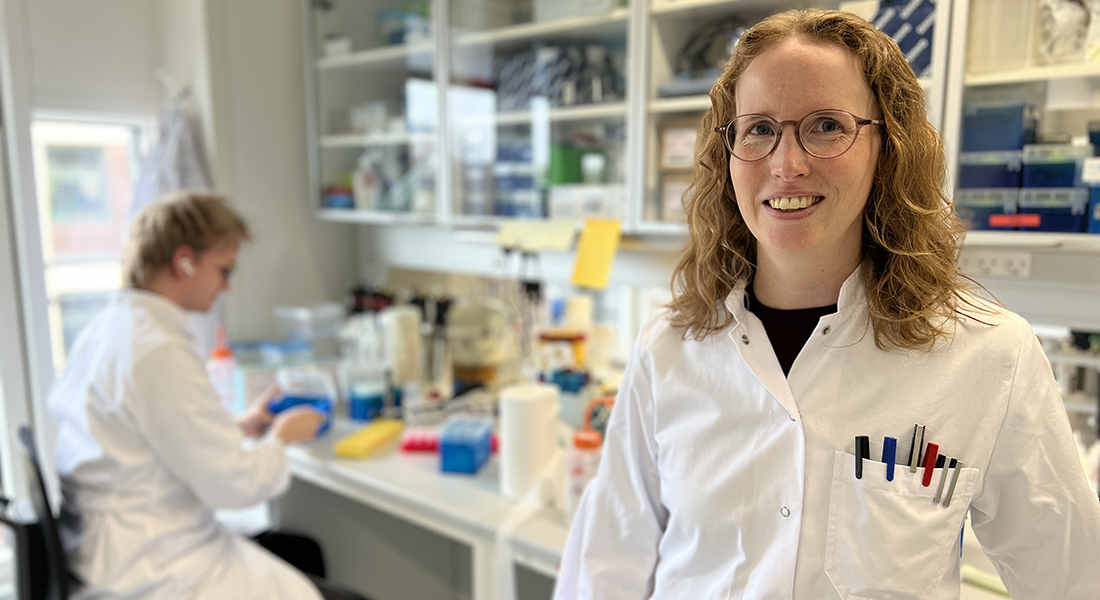
As part of the green transition, plant-based foods are becoming increasingly popular.
However, plant-based raw materials contain complex microbial communities that can affect how disease-causing bacteria survive and behave. This is an area we still know relatively little about, yet one that could potentially pose challenges for food safety.
With a Sapere Aude grant of DKK 6.3 million, the TERA project (Ecological Risk Assessment of Pathogen Persistence in Plant-Based Foods) will investigate the ecological mechanisms operating within these microbial environments.
A New Perspective on Bacterial Interactions
Traditionally, food safety assessments have been based on parameters such as temperature, pH levels and the presence of individual bacterial species.
However, microorganisms rarely exist in isolation. Instead, they form complex networks in which they either cooperate or compete with one another. Using advanced analytical techniques such as DNA sequencing and high-resolution microscopy, the research team will examine how entire microbial communities influence the survival and adaptability of pathogenic bacteria in food environments.
The goal is to identify specific microbial patterns, known as microbial fingerprints, that may be associated with an increased risk of disease.
“If we want to understand why harmful bacteria behave differently in otherwise similar foods, we need to consider the entire microbial community rather than focusing only on individual factors. This will enable us to create safer and more sustainable foods,” explains Associate Professor Henriette Lyng Røder from the Department of Food Science, who has been awarded the grant.
Strengthening Existing Risk Assessment Models
The knowledge generated by the project should provide the foundation for future risk assessment methods that integrate microbial ecology and complement existing food safety models.
The project combines microbiology, data science and food science to generate new insights into the role of microbial communities in food safety. In the longer term, this knowledge could contribute to the development of new tools and approaches for assessing microbiological risks in foods.
As the food system undergoes a green transition, the project is expected to enhance our understanding of food safety while also strengthening Denmark’s international position in food safety research.
Project facts
Project title: TERA: Ecological Risk Assessment of Pathogen Persistence in Plant-Based Foods
Grant holder: Henriette Lyng Røder, Department of Food Science (KU FOOD), University of Copenhagen
Funding body: Independent Research Fund Denmark (DFF) | Cross-Council Committee
Funding instrument: Sapere Aude: DFF Research Leader
Grant amount: DKK 6,335,419
Fiscal year: 2026
Contact
Henriette Lyng Røder
Associate professor
Department of Food Science
E-mail: h.lyng.roeder@food.ku.dk
Telephone: +45 35 33 04 38
Mobile: +45 26 86 70 06
Mikkel Andreas Beck
Journalist
E-Mail: mb@adm.ku.dk
Telephone: +45 35 32 25 46