
Lars Mortimer Munck af Rosenschöld (1935-1926)
Professor Lars Munck, a pioneer in genetics, biotechnology, and exploratory data analysis, passed away on 26 September in Lund, Sweden, aged 91 (19 July 1935 – 26 September 2026).
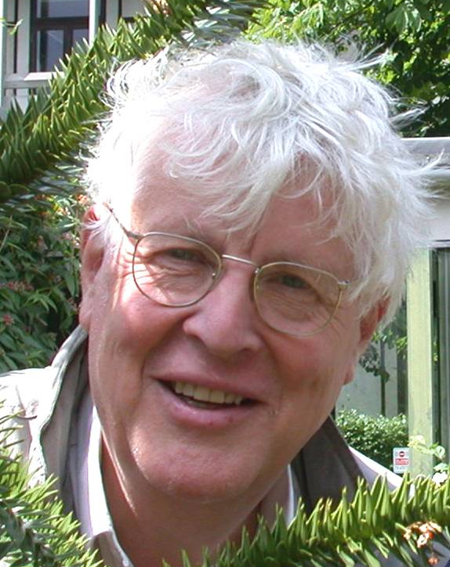
Lars Munck belonged to an old Swedish noble family and knew his family history back many generations. He could speak vividly and in great detail about his ancestors, including the naturalist Eberhard Munck af Rosenschöld (1811–1869), who, in the spirit of Linnaeus, sent plants and insects home to the Swedish Museum of Natural History (Naturhistoriska Riksmuseet) in Stockholm, including stevia, which is used today as a sweetener across the globe.
Lars Munck remained a Swedish citizen throughout his life, but it was in Denmark that he made his greatest mark. He was educated at Lund University, where he obtained his PhD (fil.dr.) and became an associate professor (docent) in genetics in 1972. As a young researcher at the Swedish Seed Association in Svalöv in the mid-1960s, using a dye-binding method he had helped develop, he discovered the first high-lysine barley, Hiproly, in the world barley collection. The finding, published in Science in 1970, demonstrated that grain protein quality could be improved genetically. It became his most famous scientific result and marked the beginning of a research programme on nutrient-dense barley that stayed with him for the rest of his life.
In 1973, he moved to Copenhagen to head the Department of Biotechnology at the Carlsberg Research Laboratory, where he remained until 1991. Here, he developed complete systems for quality control and decision support for malthouses and mills, and as early as the 1970s, inspired by Harald Martens, he introduced chemometrics and near-infrared spectroscopy (NIR). He edited the book Fluorescence Analysis in Foods (1989), which became a standard text in food analysis.
In the 1980s, as head of the Department of Biotechnology at the Carlsberg Research Laboratory, Lars Munck created a unique environment for research and development in grain technology. The staff had widely varying educational backgrounds, as Lars placed great emphasis on recruiting people with diverse competencies. Bringing together plant breeders, chemists, various types of engineers, a baker, and a specialist in human food and animal nutrition, Lars established the "cereal technology production chain" within the laboratory. It was a time when research and development were prioritized, with abundant funding available to invest in advanced equipment and analytical instruments.
In 1991, Lars Munck was appointed professor at the Royal Veterinary and Agricultural University (KVL). KVL was later merged with, and is today part of, the University of Copenhagen. Over fifteen years, he built a chemometrics and spectroscopy group that eventually became the world's largest academic chemometrics group. It was all built on his vision and ambitions, but always with a keen eye on ensuring everyone utilized their resources to the fullest. In 1995, chemometrics became part of the permanent curriculum at a Danish university for the first time, and the group's methods for online quality control based on spectroscopy, image analysis, and chemometrics quickly found their way into the food and pharmaceutical industries.
In both groups, some staff members were highly experienced, but there were also many very young people, such as newly qualified chemists or laboratory technicians, who had Lars as their first manager. Lars personally ensured that young staff felt heard and came to feel like part of a large family.
Among other events, Lars organized several workshops at Carlsberg, and later at KVL, attended by international researchers. These events typically included a trip to his holiday home on the island of Ven (Hven). Here, Lars demonstrated yet another talent: he was an outstanding cook and could conjure up the most wonderful dishes in the tiny cottage kitchen.
Lars often said, "To learn, one must first unlearn." By this, he meant that one should always approach a challenge with an open, unbiased mind. There was no room for the thought that "that will probably never work." He often arrived at the Research Centre and KVL brimming with ideas from his thoughtful morning commute on the Coast Line (Kystbanen) from his home in Helsingør. He would then share these ideas in a steady stream as challenges for various team members. Lars was as stubborn as he was enthusiastic, and he could often see things that the rest of us, with our limited experience, simply could not. "There is no substitute for professionalism" was a frequently used phrase when he felt colleagues were about to give up.
Lars taught us all an enormous amount about how to inspire one another and how to bring out the best in colleagues and staff. Lars always showed great empathy, and his infectious curiosity and humor left an impression on everyone with whom he collaborated. These qualities stayed with many of his staff throughout the remainder of their working lives.
Lars was renowned for his exceptional hospitality, which made everyone feel welcome. He did everything he could to create the best possible conditions for collaboration among his staff and research colleagues. The many scientific papers Lars wrote with his colleagues often came together in his home in Helsingør, where the kitchen or part of the living room would be transformed into a writing study.
One could not have wished for a better leader than Lars Munck. He supported and protected his people, ensuring everyone was well cared for.
Lars remained a Swede all his life, but he was very fond of Denmark. It took him, as he wrote himself, twenty years to understand Danish understatements, and he deeply appreciated Danish hygge—preferably a good discussion around a table with beer and open sandwiches (smørrebrød) in a holiday home overlooking the water. When he moved back to Lund in 2005, he wrote that he knew no one, "whether Dane or foreigner," who had been given such wonderful opportunities in Denmark.
Professionally, Lars was a tireless advocate for exploratory research and a departure from pure reductionism. He viewed himself as one of the last survivors of classical, observational biology rooted in Linnaeus, Mendel, and Darwin. Because the human brain can only grasp large, simultaneous amounts of data to a limited extent, he believed researchers should measure first and formulate hypotheses second, using chemometrics as a tool. "While technology is an express train, science is a snail," he wrote. He was a member of the Royal Danish Academy of Sciences and Letters and the Danish Academy of Technical Sciences, and was a Knight of the Order of the Dannebrog.
He continued his research long after retiring. In his mid-eighties, he published a paper in Trends in Plant Science in 2021 alongside close colleagues, and right up until the end, he worked on unifying spectroscopy, genetics, and physics into a cohesive picture of life. In one of his final manuscripts, he thanked the roughly 250 staff members and many students he had worked with over 60 years.
Lars Munck is survived by his partner Barbro, his son Magnus Munck, three grandchildren, and three great-grandchildren. Many colleagues, former students, and friends in Denmark, Sweden, and around the world will miss him dearly. Honoured be his memory.
Lars Hallgren, Pernille Bjørn Petersen, Lars Nørgaard, Søren Balling Engelsen, Rasmus Bro, Claus Andersson, Birthe Pontoppidan Møller Jespersen, Jesper Pram Rahbek, Merete Møller Engelsen, Åsmund Rinnan